

I TELL MY TRUTH AND SHARE MY VISION THROUGH MY EXHIBITIONS — Annka Kultys
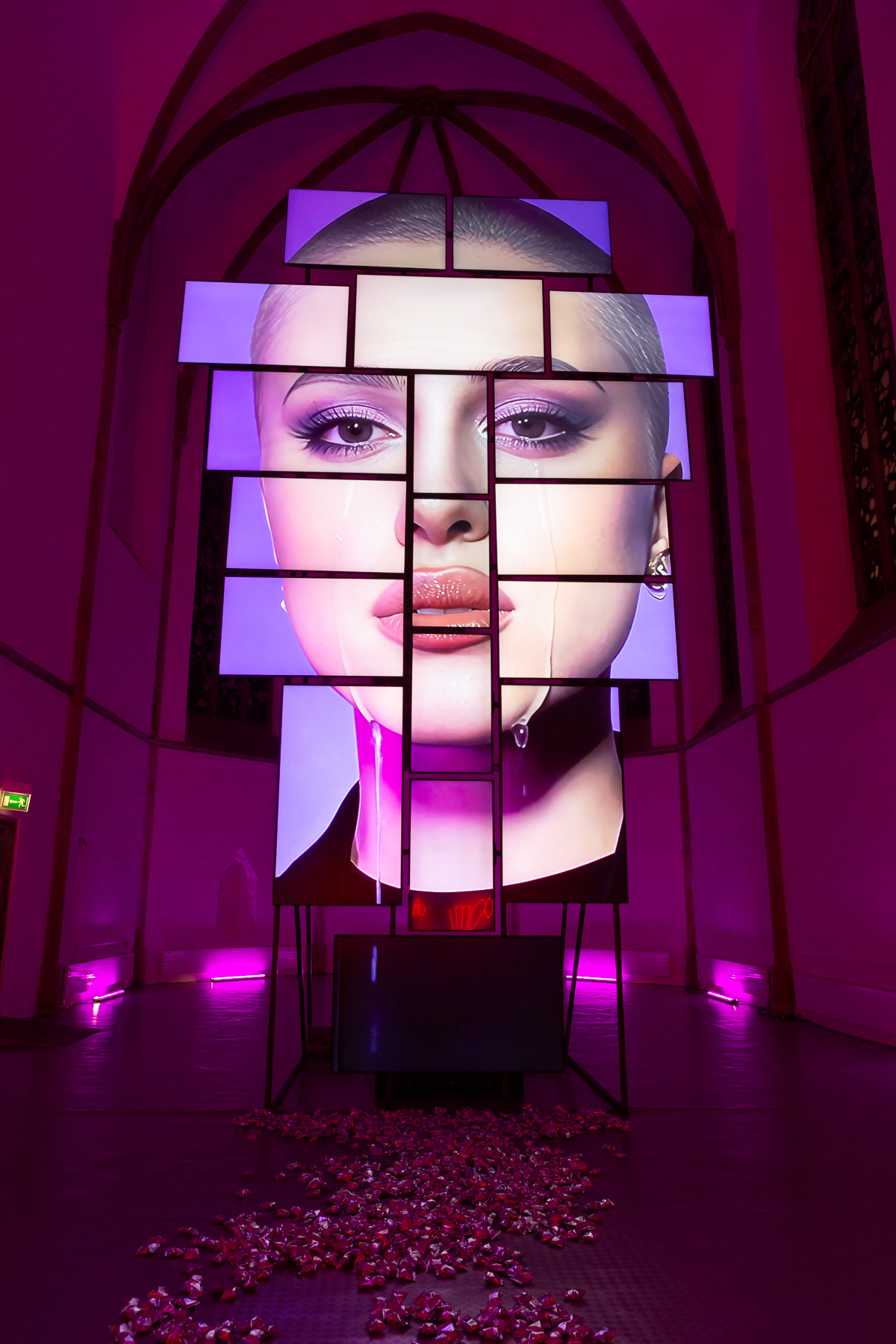
Annka Kultys is the founder and director of one of the world’s leading galleries of new-media and digital art merging physical and digital experiences: Annka Kultys Gallery, established a decade ago.
Described by the Financial Times as “early adopters of new technologies,” the Annka Kultys Gallery has presented more than 75 exhibitions and featured more than 175 artists, from established figures such as Cao Fei, Simon Denny, Signe Pierce, and Oliver Laric to a new generation of artists exploring AI, such as Jonas Lund, Anna Ridler and Sasha Stiles. As of 2020, the gallery is the first in the world to represent a humanoid robot artist: Ai-Da.
Since 2022, the gallery also runs Annka Kultys Phygital: a hybrid and virtual-reality space accessible via headset, and designed as an experimental platform for digital artists (developed in collaboration with GalleriesNow.net).
Annka holds two master’s degrees – an MSc in Mathematics from a university in Switzerland (where she grew up) and an MA in Contemporary Art from the Sotheby’s Institute in London. This dual focus gives her a unique understanding and passion for art, technology, and the digital world.
ANNKA KULTYS GALLERY presents a programme of online and VR exhibitions, augmented by invitation-only private events, and occupies a singular position within London’s contemporary art landscape as a commercial gallery dedicated entirely to digital, new-media, and technology-engaged artistic practices.
Unlike institutions or immersive venues that incorporate digital art episodically, ANNKA KULTYS GALLERY has embedded digital practice at the core of its curatorial, commercial, and intellectual identity since its inception in 2015.
SIGN UP TO OUR NEWSLETTER AND BE THE FIRST TO RECEIVE DETAILS ABOUT OUR UPCOMING EXHIBITIONS, EVENTS AND ART FAIRS
OFFICE HOURS
Wed — Sat | 12 — 6 pm
City Road, London EC1V
(by invitation)
CONTACT
Sales enquiry — Annka
+44 74 555 61 887 (WhatsApp)
inquire@annkakultys.com
Press enquiry — Aima
press@annkakultys.com
General enquiry — Eva
office@annkakultys.com
ANNKA KULTYS GALLERY is grateful for your interest but does not review new artists’ submissions.
ANNKA KULTYS GALLERY operates primarily online and does not maintain public opening hours.
PHYGITAL CURATING
(An excerpt from Jo Lawson-Tancred’s AI and the Art Market (Lund Humphries, 2023)
Annka Kultys founded her eponymous gallery in London in 2015 with the explicit aim of supporting digital and new-media artists who work with emerging technologies. The 2021 show AI Portraiture: Us and Them was a survey that offered ‘commentary about how AI sees us and how we see AI’, according to Kultys. It featured practitioners as diverse as the somewhat gimmicky Ai-Da robot to the critically acclaimed avatar artist and curator LaTurbo Avedon. The show also tapped into AI’s playful, crowd-pleasing side with works like Thomas Webb’s You can’t afford it (2020), which fed images of the visitor into an algorithm that had allegedly been trained to decide how rich someone is based on their appearance. For the conceptual artist Jonas Lund’s exhibition In the Middle of Nowhere II (2023), potted plants and office furniture were installed to give the gallery a more clinical, corporate atmosphere. The walls were covered in AI-generated tapestries filled with unnerving images of literal fat cats and pigs in suits around conference tables. The work uses a once-venerated traditional textile craft medium to explore our anxieties about where an AI-driven world might be headed.
During the COVID-19 pandemic, Kultys launched the online platform [The art happens here] as she became increasingly interested in how to show digitally native art in its ‘natural habitat’. One of the exhibitions featured was pseudonymous artist Bill Poster’s Dissimilation, which contained two video compilations featuring AI-generated deepfakes of prominent public figures Kim Kardashian, Morgan Freeman and Mark Zuckerberg, each convincingly delivering invented monologues that expose the growing threat of data exploitation and disinformation. Every one of these shows included in the online programme is essentially ‘ongoing’, because they can still be accessed at any time.
By 2022 it seemed obvious to Kultys that having a separate physical and digital exhibition programme was limiting her options. She collaborated with specialist developers at GalleriesNow to produce a ‘phygital’ gallery that could instead be accessed via virtual reality (VR). She recalled how the company’s co-founder Tristram Fetherstonhaugh promised her, ‘instead of scrolling the space, you’ll be strolling the space’. Keen to encourage people to also experience the works in person, Kultys does not share a link to view the virtual gallery online but instead supplies the necessary VR headsets in house.
The experience is vulnerable to the whims of the internet and other unexpected technical hitches, but, when in working order, the visitor is transported to a virtual version of Kultys’s bricks-and-mortar gallery. Whereas the real space inhabits a former storage unit in a rough-around-the-edges corner of London’s East End, the virtual gallery is a much larger complex. The exhibition is staged inside a central pavilion, which is situated within a wider complex of gallery spaces arranged like alcoves around a square courtyard. While the real, physical gallery is topped by corrugated industrial roofing sheets, the open-air VR version allows visitors to gaze up at an always-blue sky. ‘I feel like my gallery is finally complete,’ says Kultys. ‘My dream gallery would have been to have LED screens all over it, and the VR gallery replicates this immersive effect.’ She also noted that it is more affordable.
The hybrid ‘phygital’ approach has come to define Kultys’s curatorial vision. She had never liked the clunky screens that began proliferating throughout galleries after the NFT boom of 2021. Aside from being unseemly, they each required a specific aspect ratio. By contrast, the ‘screens’ that blanket the walls of the virtual gallery spaces are adaptable to any kind of image format. The central space can also be used to stage 3D digital sculptures, allowing these to be experienced in the round. ‘We present the digital work as it was made by the artist,’ says Kultys.
— Jo Lawson-Tancred, AI and the Art Market (Lund Humphries, 2023), pp. 48–49
OUR COMMITMENT TO ARTISTS WE (RE)PRESENT
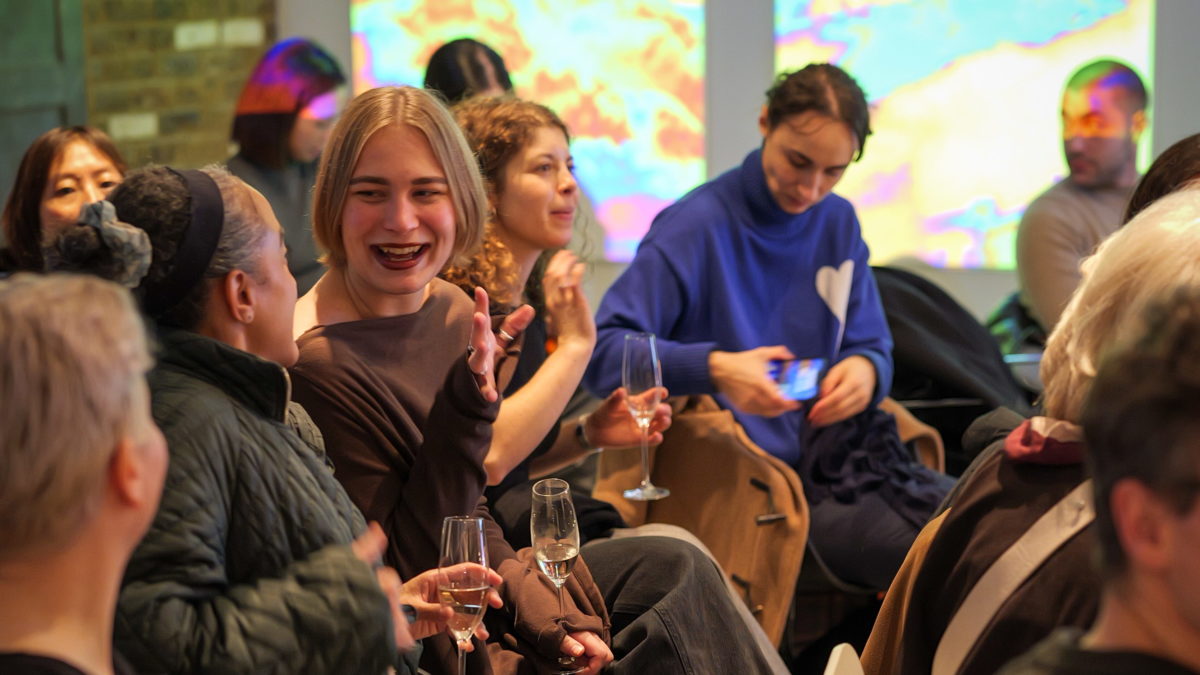
For too long, conversations around the precarity of artists have remained passive — looking backwards, rehearsing familiar narratives of why artists are poor. ANNKA KULTYS GALLERY believes it is time to move beyond passive observation and to propose a structural shift that recognises artistic labour as work — and ensures it is rewarded as such.
For digital artists in particular, revenue cannot depend exclusively on a small group of collectors or on the very limited opportunities for commercial exhibitions.
From 1 October 2025, admission to our exhibitions will be by ticket. This is not a gesture of exclusion but of solidarity: a conscious rebalancing within the art ecosystem. By contributing to the cost of entry, visitors participate directly in the shared economy of art, acknowledging that creativity and production carry value.
Tickets are fully redeemable on the day of your visit against a curated selection of artists’ prints. If you prefer not to acquire anything, your contribution still matters. Between 50–100% of ticket proceeds go directly to the exhibiting artist, ensuring their practice is materially supported.
This model aligns with a growing recognition across museums, galleries, and cultural institutions worldwide: that sustainability in the arts depends on moving away from the expectation of unpaid or invisible labour. By attending, you are not only experiencing an exhibition — you are also becoming a patron and participant in a more transparent, equitable, and future-oriented art economy.
EMBRACING CRYPTO CURRENCIES AND THE BLOCKCHAIN TECHNOLOGIES
Since January 2021, all our artworks are sold with a blockchain registered certificate of authenticity.
ANNKA KULTYS GALLERY is also accepting cryptocurrency as a form of payment for all artworks, analogue or digital.